






A buyer who asks for a jelly bra may be describing a support feature, a smooth appearance or simply a style seen online. Those meanings lead to different production briefs. Before choosing a supplier or comparing quotations, separate the garment silhouette from the technology used to make it. A useful brief explains where support is needed, how the bra should fit, what the edge should feel like and which sample will become the production reference.
At AIMEXAN, jelly-strip support, bonding, seamless knitting and cut-and-sewn assembly are available production directions. The exact method for a selected model belongs in its approved specification. The catalogue offers garment references; a photograph alone cannot establish every internal support layer or manufacturing operation. Start with a style you like, then ask the construction questions that make the order precise.
What buyers usually mean by a jelly bra
The term “jelly” commonly points to a flexible support-strip arrangement within a soft bra. It does not, by itself, identify a standard strip composition, a particular support level or a laboratory-tested performance. Two garments carrying the same retail term can differ in strip placement, cup design, fabric stretch and the way the support is attached. Treat the term as the beginning of a conversation rather than a complete specification.
Describe the desired support map. Is the aim to support beneath the cup, stabilise the side, retain the neckline shape or reduce movement in the band? Explain which areas should remain flexible and which should hold their shape. A drawing with marked zones is more useful than a general request for “stronger jelly.” Ask for an internal construction explanation alongside the physical sample so that the agreed garment can be inspected consistently.
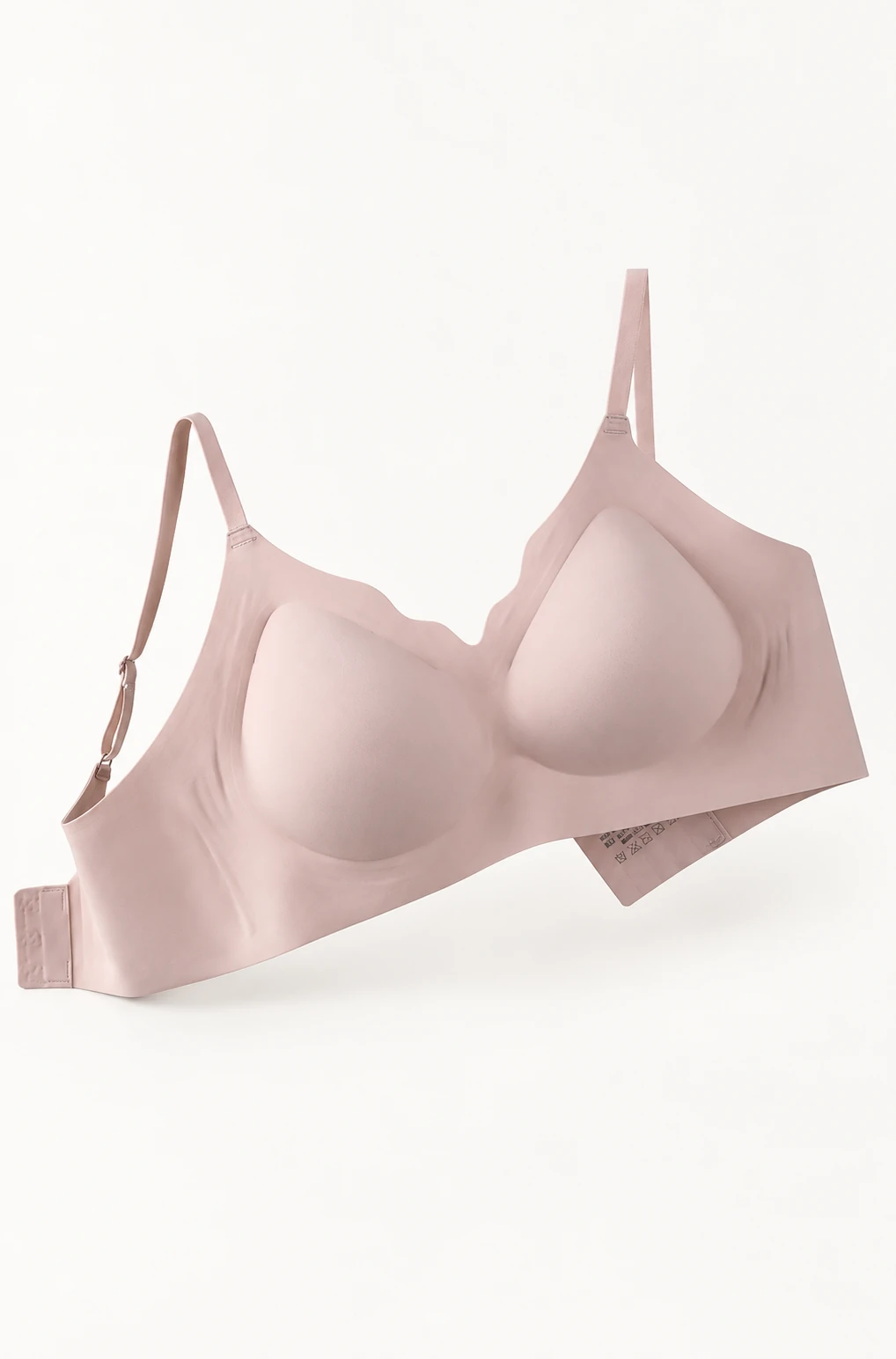
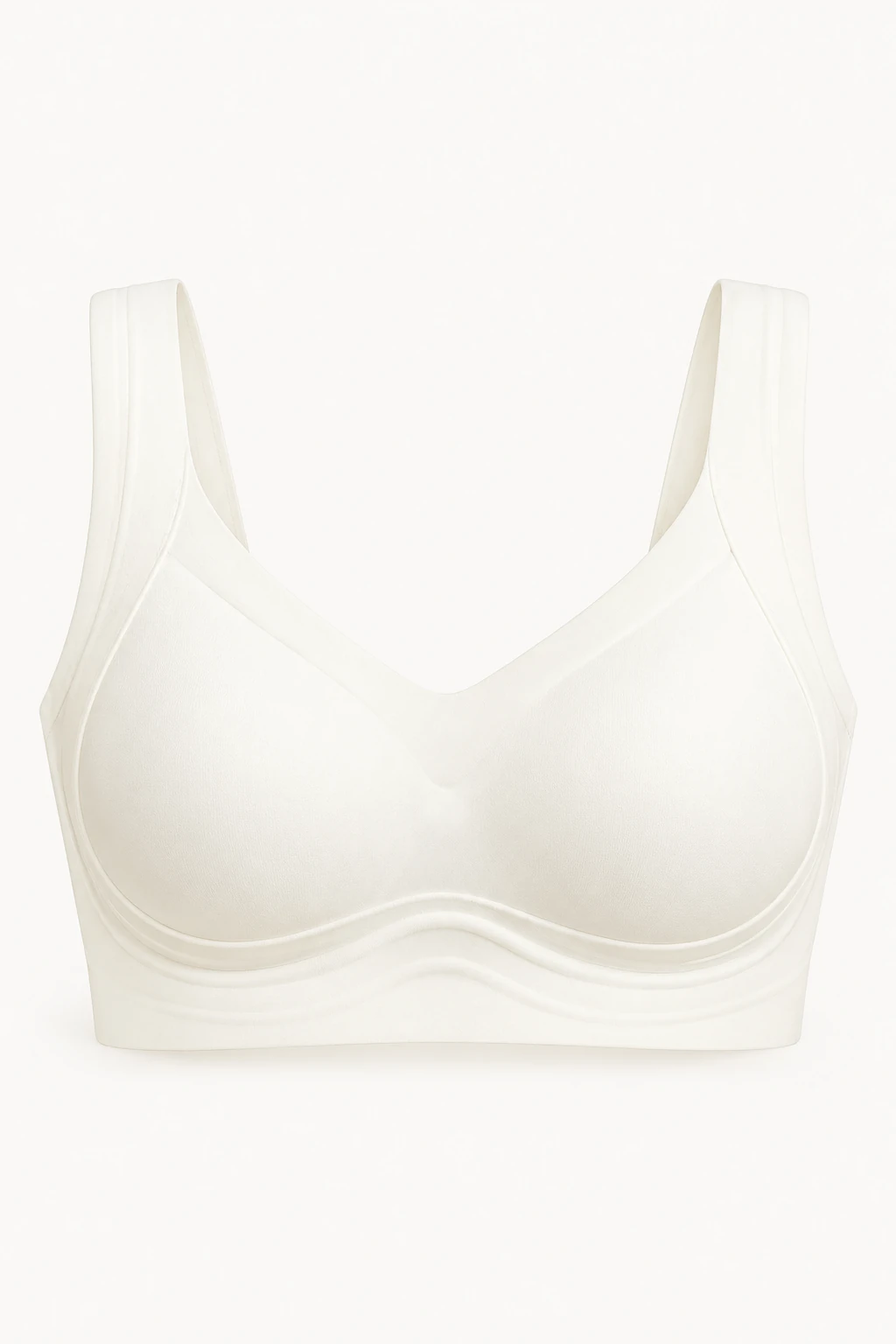
Bonding describes how parts are joined
Bonding and jelly support answer different questions. A strip arrangement concerns garment support. Bonding concerns how selected parts or edges are joined. Adhesive systems can replace stitching at suitable joins, but the fabric, adhesive, process and care conditions must work together. A smooth edge is an appearance objective; it is not enough information to define the entire bonded garment.
For a technical reference, Bemis’s Sewfree selector guide describes adhesive systems used in garment assembly. That is a general technology reference, not evidence that a particular AIMEXAN style uses a named adhesive. For your own order, ask which joins are bonded, which remain sewn, what the care instruction will be and how the finished join is evaluated on the approved sample.
A practical comparison looks at the neckline, armhole, side and lower band separately. One construction may use a bonded neckline and a sewn component elsewhere. Record the intended finish at each location. If you care about a clean edge under a thin top, assess that appearance with the clothing the customer will actually wear. Also inspect the inside surface and the garment after the agreed care review, since a front photograph cannot answer those questions.
Seamless knitting describes another production route
Seamless knitting forms garment structures through knitting equipment. It should not be used as a catch-all label for every bra with a smooth-looking edge. Santoni’s seamless machine information provides a primary reference for this manufacturing route. A bonded fabric garment and a knitted seamless garment may serve a similar wearer need while requiring different development decisions.
Ask what is knitted into the garment and what is assembled afterwards. Clarify the shaping, stretch zones, cup arrangement, straps and finishing operations. The retail word “seamless” cannot tell you whether every component is made without a joining seam. A buyer should approve the complete garment, including any later assembly, rather than assuming the entire construction from its category name.
Fit depends on the whole garment
Support strips cannot compensate for an unsuitable band, cup shape or size plan. Start by identifying the intended wearer group and how you will describe sizing. Assess coverage at the neckline and underarm, the resting position of the band, strap behaviour and the feel during ordinary movement. A single wearer’s approval is useful feedback, but it should not quietly become a claim that the garment fits every person within a broad size label.
Keep fit comments specific. Instead of “too tight,” record the size worn, the body-measurement context you have permission to collect, the garment point concerned and the observed effect. Instead of “not enough support,” describe the movement or position that needs improvement. Clear comments help the development team decide whether to change the pattern, material, strip placement, cup arrangement or a combination of those elements.
Write a construction brief a supplier can quote
A short construction brief can contain the selected model, target size range, fabric direction, support zones, cup and pad requirements, edge treatment, straps, closure and care expectations. Add reference images as visual context, but state which features you are requesting. If an image belongs to another brand, use it to explain the objective and avoid asking the supplier to reproduce logos or proprietary artwork.
Separate required features from preferences. A requirement might be an adjustable strap or a particular coverage measurement; a preference might be a softer hand feel if the chosen material permits it. This distinction keeps the first quotation useful. It also prevents a later sample review from treating every mood-board detail as an agreed production instruction. Keep all revisions in the same versioned brief.
Choose the cooperation route after defining the changes
If an existing garment already meets the fit and construction objective, a private-label route may be the appropriate starting point. Adding a brand label is a different scope from changing the fabric or support arrangement. When you change those functional parts, ask for a modified sample and a feasibility review. A completely new garment needs a development scope with its own technical and approval records.
Compare the jelly and seamless bra production directions with the bra and camisole model catalogue. AIMEXAN’s reference private-label minimum is 500 pieces per style, while modified styles and full OEM/ODM have different minimums. The ordering guide explains those routes. A written quotation confirms the exact garment, colour allocation and schedule for your project.
Approve evidence before making performance claims
When comparing two samples, write down which details remain the same and which have changed. If the band, fabric and strip arrangement all change together, the review cannot tell you which one improved the result. Ask for a clear revision explanation and assess the full garment against your customer brief. This makes sample feedback easier to act on and prevents an attractive retail name from replacing the product-development decisions that actually determine the order.
Words such as supportive, breathable or invisible can mean different things to different shoppers. Decide which statements are simple descriptions and which require a measurable claim. If you intend to advertise a specific functional performance, agree the test method, product scope and evidence before using the claim. A general technology article or another manufacturer’s test report cannot substantiate the performance of your own ordered garment.
Your final approval pack should identify the sample version, construction notes, measurements, material references, label artwork and care information. Retain the physical approval reference where practical. This gives purchasing, production and inspection a shared target and makes a repeat order easier to discuss. A successful jelly-bra sourcing project begins with an understandable garment specification and ends with that specification being reflected in the supplied product.